LogosWH_Negative_GraphLogosWH_Negative_GraphLogosWH_Negative_GraphLogosWH_Negative_Graph
  • Home
  • ABOUT
    • The project
    • The objective
    • Contributors
    • Acknowledgments
  • WEBGIS MAP
  • WEBGIS STRUCTURE
    • Historical Maps
    • Ancient Remains
    • Modern Interventions
  • TIMELINE
  • IMAGES
  • BIBLIOGRAPHY
  • My account
  • Logout
  • GR
  • EN
✕
December 5, 2018

1860–1861

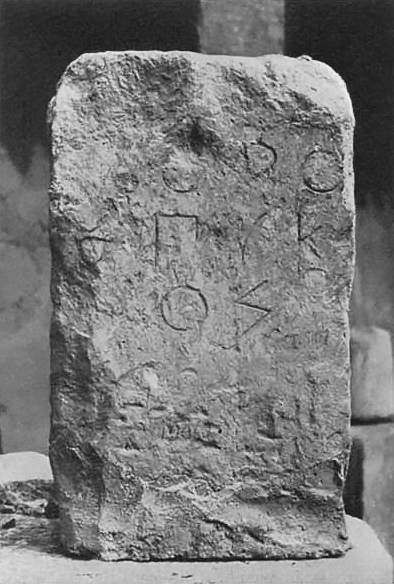
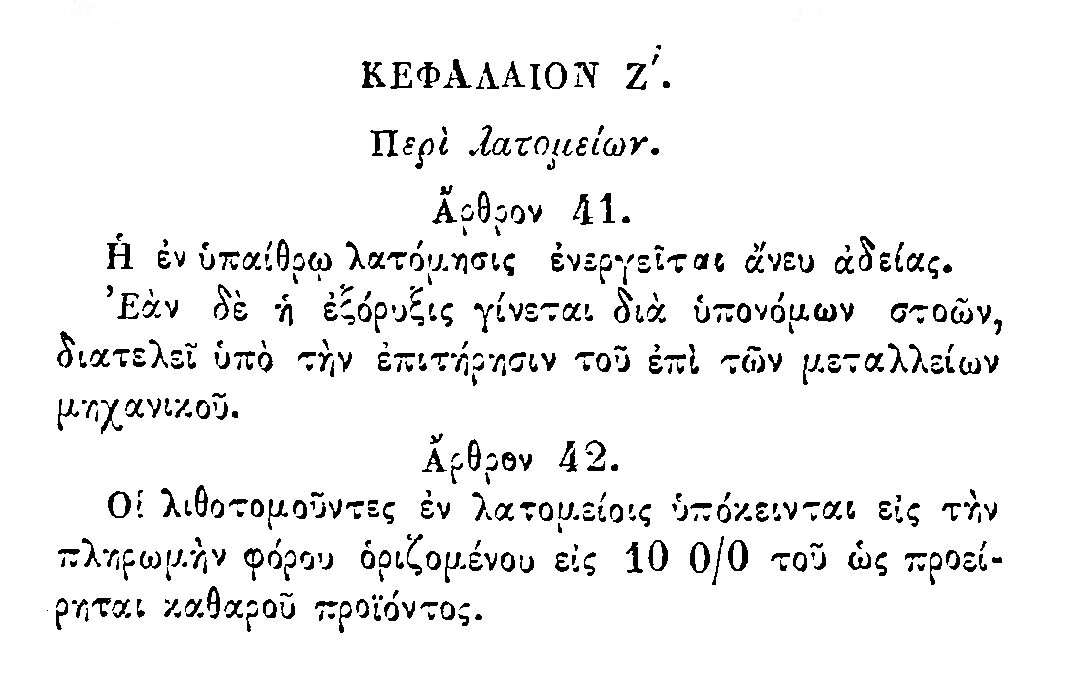
The excavations on the Pnyx and the Act on the deregulation of quarrying   The Archaeological Society at Athens undertakes excavations under the direction of Petros Pervanoglou, west of the Hills of the Pnyx and of the Muses (Philopappos). The […]
Do you like it?
Read more
December 5, 2018
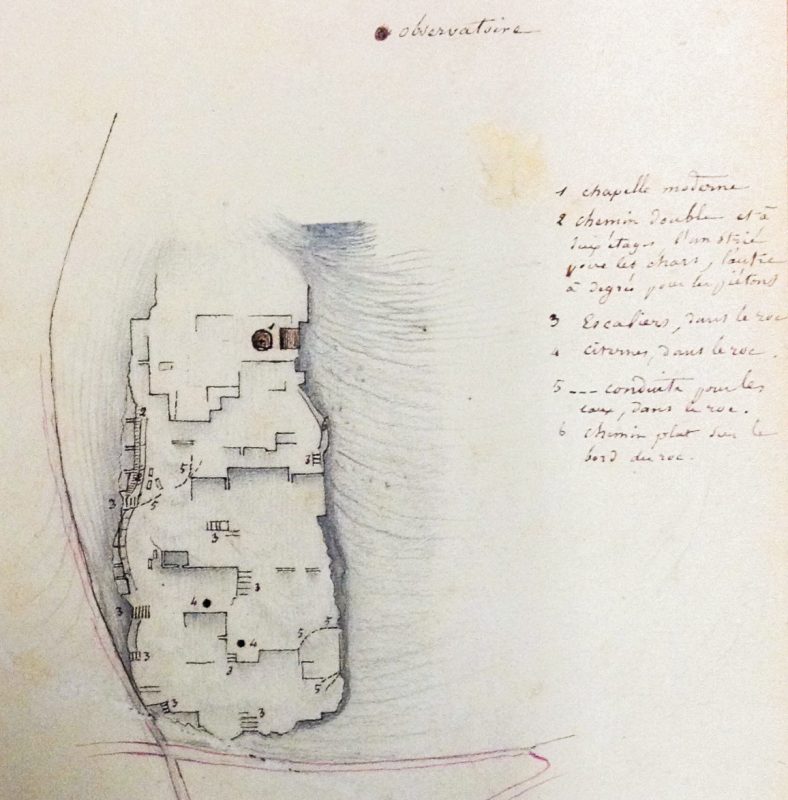
Σκαρίφημα του Émile Burnouf με κάτοψη των λαξευμάτων από τον πρόβολο της Αγίας Μαρίνας.

1849

The archaeological map by Émile Burnouf   In his treatise, Émile Burnouf, a delegate of the French School of Archaeology, describes and depicts on an accompanying map the ancient remains of houses, streets, cisterns and graves that were visible across […]
Do you like it?
Read more
December 5, 2018

1842–1846

The construction of the Observatory and excavations at the rear of the Pnyx   The first research foundation in Greece was housed in a building constructed upon drawings of the Danish architect Theophilus Hansen, and thanks to a donation by […]
Do you like it?
Read more
December 5, 2018

1837

Installation of the first abattoir   In a remote stretch of land to the north of the Observatory the first basic abattoir is established under the mayoralty of Demetrios Kallifronas (1837, 1840–1841). In his treatise on the Western Hills of […]
Do you like it?
Read more
December 5, 2018

1834

The Western Hills set outside urban planning   After the proclamation of Athens as capital of the newly-founded Greek state, the urban planning by architects Kleanthis and Schaubert keeps intact the ancient landscape of Athens on the Hills. The expansion […]
Do you like it?
Read more
December 5, 2018

1831

The first archaeological research undertaken by Pittakis   From 1831 onwards, and under the auspices of the Archaeological Society at Athens, the archaeologist Kyriakos Pittakis would now and then undertake searches in the area of the Pnyx. These brought to […]
Do you like it?
Read more
December 5, 2018

1826–1827

The siege of the Acropolis   The caves and fortresses of the Hills change hands between the Greek and Turk besiegers of the Castle, who were setting up their bastions on Agia Marina, on Seggio (Philopappos) and the Pnyx. The […]
Do you like it?
Read more
December 5, 2018

1684–1697

The Venetian–Turkish War: The siege of the Parthenon viewed from the Hills   According to sources, in 1687 the Venetians placed a battery of 15 cannons on the Hill of the Muses (Philopappos), another one of 9 cannons on the […]
Do you like it?
Read more
December 5, 2018

1458–1687

Post-Byzantine period: Folk beliefs around the caves and the rock-cut spaces of the Hills   On this barren landscape lacking any form of vegetation, the natural caves and ancient rocky cuttings inspire stories in which history mingles with legends, while […]
Do you like it?
Read more
December 5, 2018
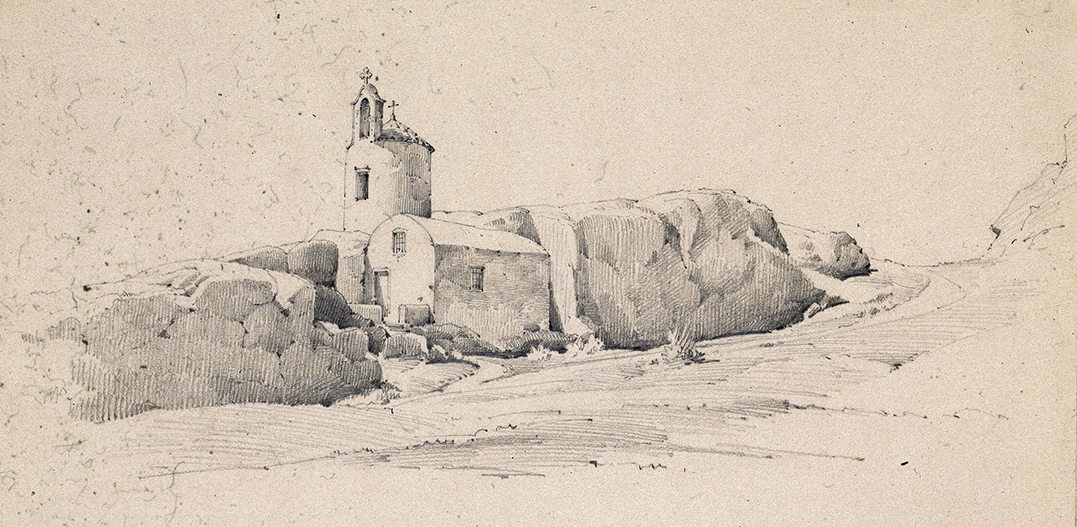
Η Αγία Μαρίνα επισκευασμένη μετά την Επανάσταση (Royal Danish Library - Danish National Art Library).

10th–12th c. AD

Mid-Byzantine period: Erection of churches atop ancient ruins   The Hills’ neighbourhood is revived. Agios Demetrios Loumbardiaris is built upon the ruins of an ancient tower of the Compartment Wall (diateichisma). The little church of Agia Marina is founded following […]
Do you like it?
Read more
December 5, 2018

4th–7th/8th c. AD

Early Christian period: Residential and funeral use of the Hills   It seems that the area of the Hills continued to be inhabited until the 6th century A.D., while the rock-cut caves near the Pnyx and the grounds of the […]
Do you like it?
Read more
December 5, 2018

2nd–3rd c. AD

Roman citizens settling on the Hills   The small rock-cut shrine bearing the relief representation of Pan, to the northeast of the Hill of the Pnyx, is transformed and constitutes part of a luxurious residential complex; it has undergone consecutive […]
Do you like it?
Read more
Prev page
1234
Next page

DIPYLON

MAP   CONTACT US   SITEMAP   TERMS OF USE   Facebook logo

Latsis Foundation

© 2026 Dipylon.
    Manage Cookie Consent
    This website uses cookies for its efficient operation and to improve your navigation. By continuing to browse, you accept their use, in accordance with our cookie policy.
    Functional Always active
    The technical storage or access is strictly necessary for the legitimate purpose of enabling the use of a specific service explicitly requested by the subscriber or user, or for the sole purpose of carrying out the transmission of a communication over an electronic communications network.
    Preferences
    The technical storage or access is necessary for the legitimate purpose of storing preferences that are not requested by the subscriber or user.
    Statistics
    The technical storage or access that is used exclusively for statistical purposes. The technical storage or access that is used exclusively for anonymous statistical purposes. Without a subpoena, voluntary compliance on the part of your Internet Service Provider, or additional records from a third party, information stored or retrieved for this purpose alone cannot usually be used to identify you.
    Marketing
    The technical storage or access is required to create user profiles to send advertising, or to track the user on a website or across several websites for similar marketing purposes.
    • Manage options
    • Manage services
    • Manage {vendor_count} vendors
    • Read more about these purposes
    View preferences
    • {title}
    • {title}
    • {title}